May 11, 2026
Running a small business involves managing multiple responsibilities every day. From handling customer inquiries and assigning tasks to managing invoices, tracking employees, and maintaining service quality, business owners often juggle several operations at once. When these activities are handled manually, mistakes, delays, and communication gaps can easily occur.
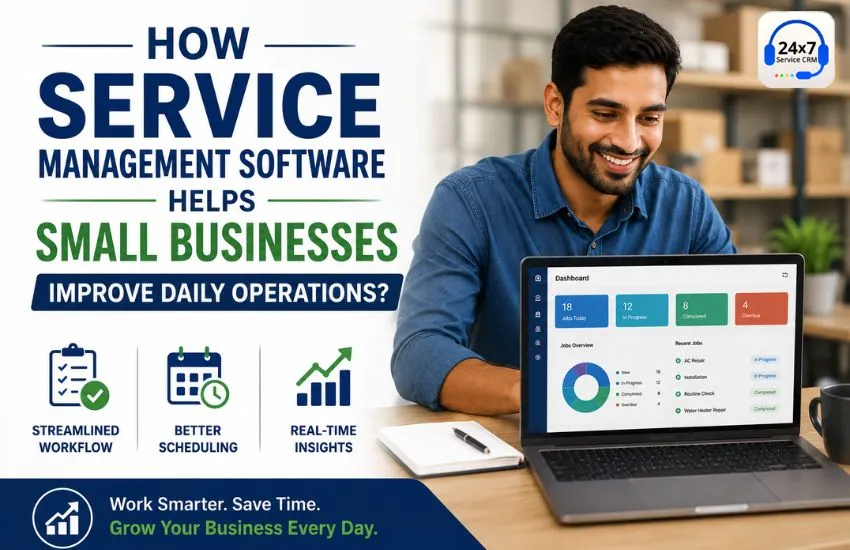
This is why many businesses are now adopting Service Management Software to streamline daily operations and improve overall efficiency. Whether it is a repair service company, HVAC business, cleaning service provider, IT support company, facility management business, or maintenance agency, service management software helps automate operations and improve customer satisfaction.
Small businesses especially benefit from automation because it reduces manual workload and allows teams to focus more on customer service and business growth.
Service Management Software is a digital platform that helps businesses manage customer requests, service scheduling, technician assignments, billing, inventory, and daily workflow from a centralized system.
It acts as an operational hub where business owners can track all activities in real-time and manage field teams efficiently.
Modern service management platforms typically include:
Many service-based businesses are moving toward cloud-based platforms because they simplify workflow management and improve operational visibility.
Small businesses often rely on spreadsheets, paper records, WhatsApp communication, and manual coordination. While this may work initially, it becomes difficult to manage operations efficiently as the business grows.
Common challenges include:
Manual operations can also increase administrative workload and reduce employee productivity.
Service management software stores all business information in one place. Customer details, service history, invoices, technician reports, and inventory records can be accessed from a single dashboard.
This centralized system reduces confusion and helps business owners monitor operations more effectively.
Cloud-based service management solutions are especially useful for businesses with remote or field teams because they provide real-time access from anywhere.
One of the biggest advantages of service management software is automated scheduling.
Instead of manually assigning jobs, managers can quickly dispatch service requests to available technicians based on location, availability, and expertise.
This improves response times and reduces scheduling conflicts.
Field service software providers emphasize that intelligent scheduling helps improve operational efficiency and technician utilization.
Customers expect quick updates and professional communication. Service management software helps businesses send automated notifications such as:
Automated communication improves customer trust and reduces the number of follow-up calls.
According to customer service research, faster communication significantly improves customer satisfaction and retention rates.
For businesses with field employees or technicians, managing daily tasks manually can become difficult.
Service management software helps monitor:
Many modern platforms also provide mobile apps where technicians can update job status directly from customer locations.
Discussions among field service professionals frequently highlight mobile accessibility and live status tracking as essential productivity features.
Manually creating invoices might increase accounting errors and take up precious time.
Service management software automates:
This reduces paperwork and improves cash flow management.
Small businesses using digital invoicing systems often report faster payment collection and reduced administrative burden.
Businesses that provide repair, maintenance, or installation services often need spare parts and equipment management.
Service management software helps track:
Proper inventory management prevents delays caused by unavailable parts and reduces unnecessary stock purchases.
Automation reduces repetitive administrative work. Employees spend less time on paperwork and more time serving customers.
Tasks such as appointment reminders, service tracking, invoice generation, and reporting are handled automatically by the software.
This allows small businesses to manage more service requests without increasing operational staff.
Industry discussions indicate that workflow automation is one of the most valuable investments for growing service businesses.
Field service management software Service CRM provides detailed business reports that help owners make better decisions.
Reports may include:
These insights help identify operational issues and improve business planning.
Customers prefer businesses that provide fast, professional, and transparent service.
By improving response times, communication, billing accuracy, and service tracking, service management software helps businesses deliver a better customer experience.
Satisfied customers are more likely to provide repeat business and referrals.
Service management solutions are useful for many industries, including:
Even small startups can benefit from automation because it helps create organized and scalable operations.
Traditional software Service CRM often requires installation on local computers and limited office access. In contrast, cloud-based service management platforms offer:
This flexibility is especially beneficial for small businesses with field teams.
Technology is rapidly changing the service industry. Modern field service management software Service CRM platforms are now integrating:
As businesses continue adopting digital transformation, service automation will become even more important for maintaining competitiveness.
Service Management Software has become an essential tool for small businesses looking to improve daily operations, increase productivity, and deliver better customer service.
From job scheduling and technician management to billing and customer communication, the software simplifies complex business processes and reduces manual workload.
For small service-based businesses, investing in the right service management solution can improve operational efficiency, reduce costs, increase customer satisfaction, and support long-term business growth.
In today’s competitive market, businesses that embrace automation and digital management systems are better positioned to grow successfully and provide professional service experiences to their customers.










Instant free download from Play Store and Apple. Service CRM is one the best Software or Application for field service management. You can book a demo Online.