Jan 29, 2026
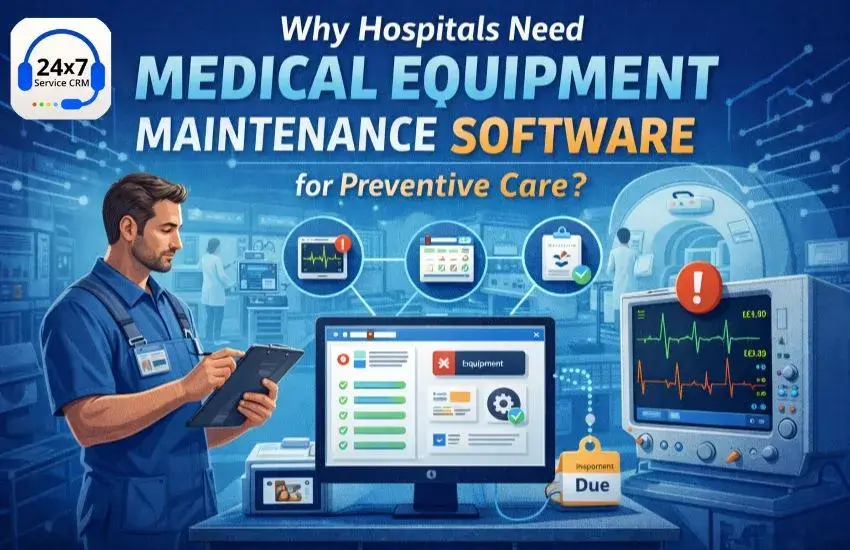
Modern hospitals rely heavily on medical equipment to diagnose, monitor, and treat patients effectively. From imaging machines and ventilators to infusion pumps and laboratory devices, medical equipment plays a critical role in patient care. However, as healthcare facilities grow and technology advances, managing and maintaining these assets becomes increasingly complex. This is where medical equipment maintenance software becomes essential—especially for preventive care.
In 2026 and beyond, Healthcare companies are shifting from reactive maintenance to preventive maintenance strategies, and medical equipment maintenance software Service CRM is at the center of this transformation.
Preventive care in hospitals goes beyond patient check-ups and early diagnosis. It also includes ensuring that all medical equipment functions safely, accurately, and without unexpected failures. Equipment downtime can lead to delayed treatments, compromised patient safety, increased operational costs, and regulatory non-compliance.
Preventive maintenance focuses on identifying and addressing potential issues before they cause breakdowns. Medical equipment service software enables hospitals to implement structured, proactive maintenance plans that support uninterrupted patient care.
Many hospitals still rely on spreadsheets, paperwork, or disconnected systems to manage equipment maintenance. These manual methods often result in:
Without a centralized system, maintenance teams struggle to maintain consistency, accountability, and visibility across all hospital assets.
Medical equipment maintenance software provides a centralized database for tracking all medical assets across departments and locations. Each piece of equipment is assigned a digital profile containing essential details such as installation date, service history, warranty information, and compliance requirements.
This centralized approach helps hospitals maintain complete visibility over their equipment inventory, making it easier to plan preventive maintenance activities and avoid last-minute repairs.
One of the key benefits of medical equipment maintenance software Service CRM is automated preventive maintenance scheduling. The software allows hospitals to define maintenance intervals based on manufacturer recommendations, usage levels, and regulatory standards.
Automated reminders ensure that maintenance tasks are never missed. Technicians receive timely notifications, helping them service equipment before issues arise. This reduces emergency breakdowns and extends the lifespan of costly medical devices.
Any healthcare facility's first concern is patient safety. Inaccurate diagnoses, treatment delays, or even life-threatening circumstances might result from malfunctioning or badly maintained technology.
Medical equipment maintenance software ensures that devices are regularly inspected, calibrated, and serviced. By reducing equipment failures, hospitals can provide reliable and consistent care, improving patient outcomes and trust.
Hospitals must comply with strict regulatory standards set by healthcare authorities and accreditation bodies. Maintaining accurate maintenance records is essential for audits, inspections, and certifications.
Medical equipment maintenance software automatically documents service activities, inspection reports, and compliance checks. This makes it easier for hospitals to demonstrate adherence to regulatory requirements and avoid penalties or operational disruptions.
Unexpected equipment failures are expensive. Emergency repairs often cost more than scheduled maintenance and may require urgent part replacements or external service providers.
By implementing preventive maintenance through medical equipment maintenance software, hospitals can significantly reduce downtime and maintenance costs. Planned maintenance allows better budgeting, efficient resource allocation, and reduced reliance on reactive repairs.
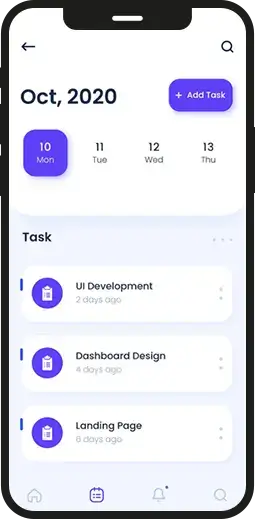
Maintenance teams in hospitals often manage hundreds or thousands of devices. Medical equipment maintenance management software streamlines technician workflows by assigning tasks, tracking job progress, and providing access to equipment history and service checklists.
Technicians can focus on high-value tasks instead of paperwork, improving productivity and accountability. Mobile access further enables technicians to update job status in real time, improving coordination across departments.
Medical equipment maintenance software Service CRM provides valuable insights through reports and analytics. Hospital administrators can analyze equipment performance, maintenance frequency, failure trends, and lifecycle costs.
These insights help hospitals make informed decisions about equipment replacement, upgrades, and preventive maintenance strategies. Data-driven planning ensures optimal use of budgets and resources.
Every medical device has a lifecycle—from acquisition to disposal. Medical equipment management software helps hospitals track this lifecycle efficiently.
By analyzing maintenance history and performance data, hospitals can identify aging or underperforming equipment and plan timely replacements. This proactive approach supports long-term preventive care strategies and reduces risks associated with outdated devices.
As healthcare systems increasingly focus on preventive care, the reliability of medical equipment becomes even more critical. Medical equipment maintenance software supports this goal by ensuring that devices are always ready to support early diagnosis, continuous monitoring, and proactive treatment.
In 2026, hospitals that adopt digital maintenance solutions are better positioned to deliver high-quality preventive care while managing costs and regulatory demands effectively.
Medical equipment maintenance software is no longer just a tool for maintenance teams—it is a strategic necessity for hospitals focused on preventive care. By enabling automated scheduling, centralized asset management, regulatory compliance, and data-driven decision-making, this software helps hospitals ensure equipment reliability, patient safety, and operational efficiency.
Hospitals that invest in medical equipment maintenance software Service CRM today are building a stronger foundation for preventive care, improved patient outcomes, and sustainable healthcare operations in the future.









Instant free download from Play Store and Apple. Service CRM is one the best Software or Application for field service management. You can book a demo Online.